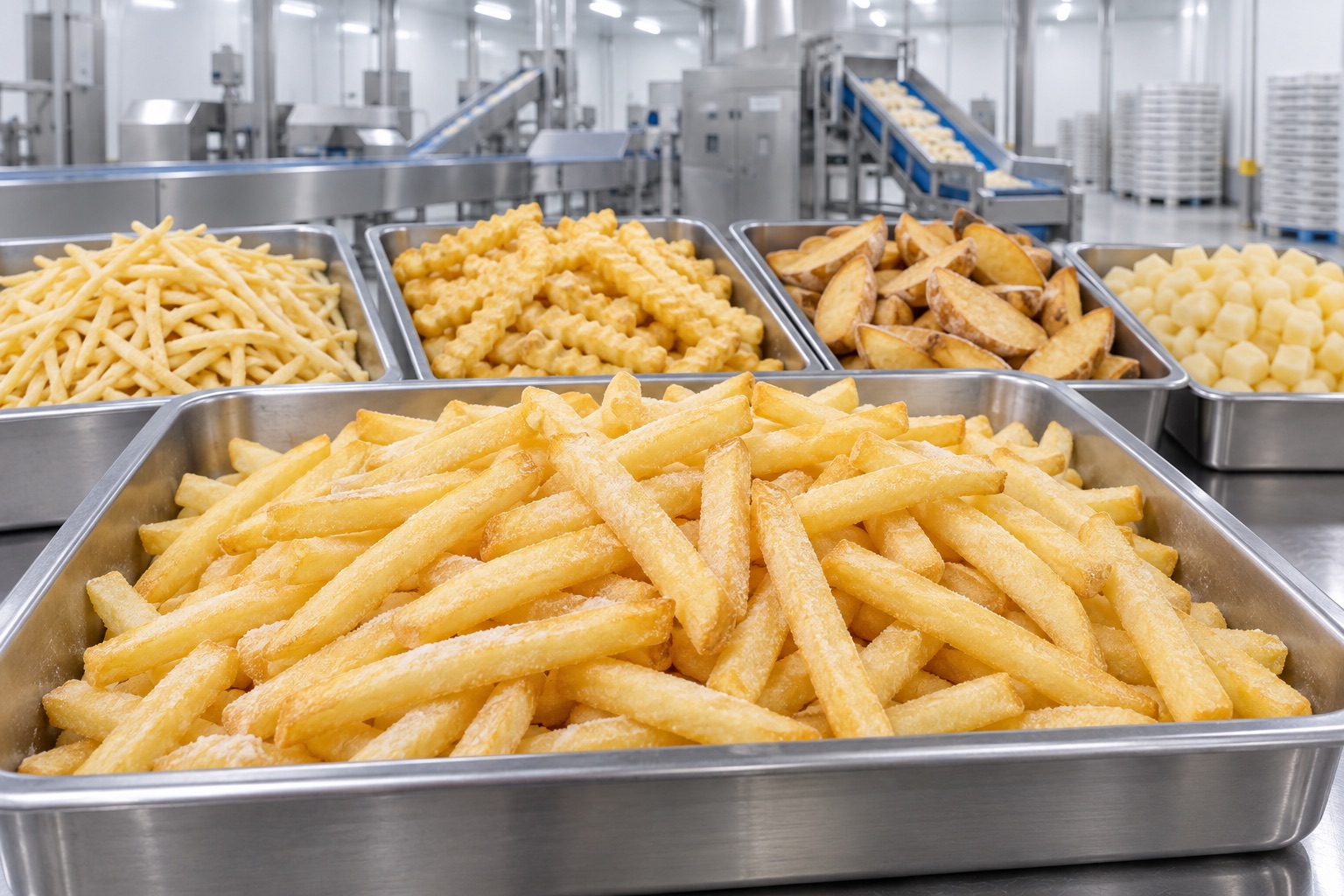
Choose the cut around the customer’s menu and service channel
Straight-cut fries have a smooth-sided cut profile; crinkle-cut fries have a ridged or zigzag profile. For a foodservice distributor, restaurant group or importer comparing bulk frozen French fries, this is the beginning of the specification. The cut name does not describe the complete recipe, size, preparation method or pack.
Start with the intended outlet and service process: restaurant side dishes, QSR, institutional catering, takeaway or a retail frozen range. Ask the customer what presentation, portion and kitchen workflow they need. Either cut may be considered for more than one channel; approve its performance in the actual application rather than choosing on appearance alone.
Specify dimensions and length separately from the cut name
State the requested cut dimensions, length distribution, skin preference and the method used to assess short or broken pieces. For crinkle-cut fries, include a reference photograph or sample of the desired ridge profile and agree where the dimensions are measured. A product called crinkle cut is not one universal size.
Official manufacturer pages show why these fields matter. McCain identifies the cut size and uncoated status separately on its Cream Flesh Straight Cut product; Aviko identifies the size of its own Crinkle Fries item. These are examples of item-specific declarations, not TPJ specifications. Obtain the current specification for each sample before comparing offers.
Where a buyer has limits for short pieces or defects, record the sampling quantity, sorting method and acceptance criteria together. A photograph of an approved portion helps the supplier understand the presentation target, while the written specification provides the basis for inspection.
Keep coating and ingredient approval as separate decisions
Cut shape and coating are separate purchasing choices. Do not assume that a smooth-sided fry is uncoated or that ridges establish a coating recipe. Ask for the selected SKU’s ingredient declaration, allergen information, seasoning details and preparation instructions. Any dietary or certification claim should be checked against the actual item and applicable facility documents.
If coating is a deciding factor, use the linked coated-versus-uncoated guide to prepare that part of the trial. Keep the cut comparison focused on the buyer’s complete candidates. Otherwise, a difference in recipe, thickness or preparation could be mistaken for an effect of shape alone.
Use a recorded frozen inspection and kitchen trial
Identify each sample by supplier, product code, lot and specification revision. Inspect the frozen pieces before preparation and photograph the cut profile, length mix and any observed breakage. Agree the trial procedure with the kitchen team so both purchasing and operations can interpret the result.
Use preparation instructions confirmed for each selected SKU. Keep comparable conditions where appropriate, such as equipment, starting sample weight, oil condition, draining method and serving assessment. Record necessary differences in time or method rather than forcing different products through one unvalidated cooking setting. Simplot’s product page, for example, lists preparation information against its named crinkle-cut item.
Assess colour, internal texture, external finish and the portion at the customer’s actual service point. If takeaway or holding is part of the process, reproduce that workflow using the intended packaging and record the assessment interval. Avoid promising a universal holding time or declaring one shape inherently superior.
| Buyer check | Straight-cut sample record | Crinkle-cut sample record |
|---|---|---|
| Item identity | Product code, lot, recipe and specification | Product code, lot, recipe and specification |
| Frozen inspection | Dimensions, length mix and broken pieces | Ridge profile, measurement points, length mix and broken pieces |
| Preparation | Confirmed instructions, equipment and starting weight | Confirmed instructions, equipment and starting weight |
| Accepted serving | Cooked weight, target portion and rejected pieces | Cooked weight, target portion and rejected pieces |
| Service assessment | Finish and texture at the agreed service point | Finish and texture at the agreed service point |
| Commercial pack | Bag net weight, bags per case and case net weight | Bag net weight, bags per case and case net weight |
Compare accepted portions and consistent quotation terms
First check that the quoted bag and case quantities describe the same net-weight basis. Then use the kitchen trial to record how much prepared product meets the buyer’s acceptance standard and how many complete portions it provides at the agreed serving weight. Comparing equal carton prices without checking net weight and accepted portions can hide important differences.
For a product-cost comparison, divide the cost of the tested quantity by its accepted portions. Compare candidates under the same cost boundary: for example, both at the same agreed delivered basis. Record freight, labour, energy and oil costs separately unless they are included consistently. Do not apply an assumed yield factor to either cut before testing.
For wholesale packing or a buyer-brand programme, confirm bag weight, bags per case, case markings and handling requirements. Pack options, order quantity and the producing facility are reviewed for the proposed supply programme; another manufacturer’s published pack does not establish a TPJ pack.
Send a focused wholesale fries RFQ to TPJ
Send the required cut shape, dimensions and length targets, skin preference, coating or seasoning brief, preparation equipment, target portion, pack configuration, destination country or port, expected volume and delivery period. Include a reference sample or photographs where the customer has a specific presentation requirement.
If both cuts remain under review, request separate item specifications and sample records, with quotations on the same commercial basis. TPJ reviews the product and packing requirements with the selected producing facility. Confirm sample acceptance, availability, MOQ, lead time and written quotation terms for the proposed order.
Technical references
These references explain specification terminology and buyer checks. Third-party grades, recipes and performance claims do not establish the specification of a TPJ product.
Use this checklist as a discussion guide. Product availability, technical values, certification scope and destination eligibility are confirmed for each selected item and producing facility.