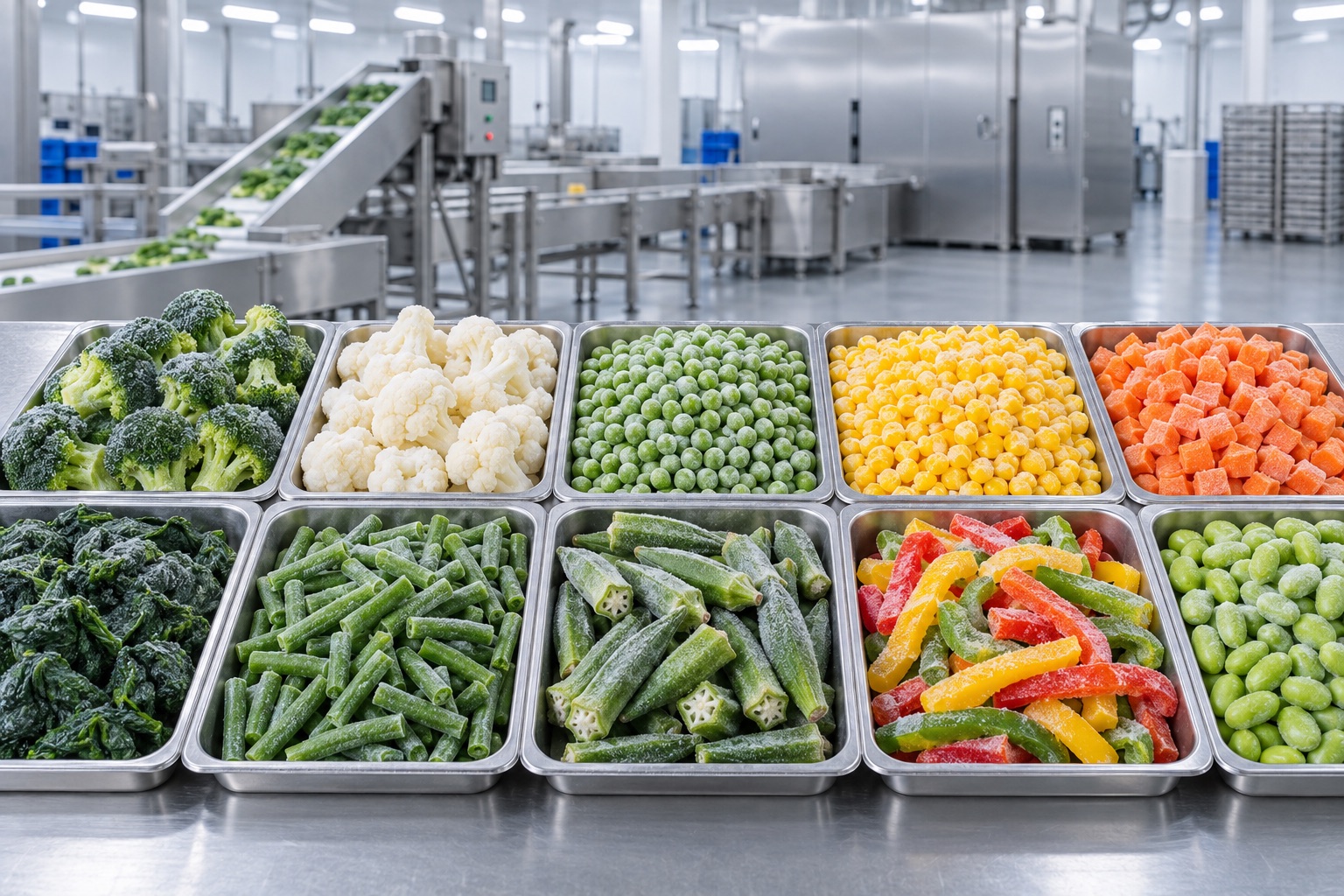
Define the vegetable blend around the buying application
Foodservice distributors, ready-meal manufacturers and retail repackers can all buy bulk IQF mixed vegetables, but their acceptance criteria differ. A side dish needs a particular visual balance, a filled product needs ingredients that distribute through the recipe, and a repacking line needs a blend that matches the approved label. Begin with the intended application and the final customer’s product brief.
Write every component into the specification. Commercial names such as mixed vegetables or four-way mix do not identify a universal recipe. Ardo publishes a mixed-vegetable SKU with component percentages, while Simplot’s Meadow Vegetable Blend identifies a different four-vegetable combination. These are examples of why a buyer should compare the actual ingredient list and specification for each proposed SKU.
Record target ratios and the basis for checking them
If proportions are specified by weight, record the target percentage of every component and check that the complete recipe totals 100%. List added ingredients separately where relevant and confirm whether the agreed percentages describe the vegetables alone or the complete supplied product. A three-component name does not establish equal shares.
Agree the allowed variation, sampling plan and calculation method before approving a blend. Define the quantity to inspect, where samples are taken, the condition of the product and how components or fragments are separated and weighed. Write whether acceptance applies to an individual pack, a combined sample or a production lot. Do not compare a piece-count result with a weight-based target.
Specify each vegetable component as well as the overall mix
Describe carrot dice, bean cuts, corn kernels, peas or other selected components individually. Include the cut, measurement direction, nominal dimension and agreed variation where these affect the finished application. A uniform bag appearance does not establish that every component meets its own size and defect criteria.
Define broken pieces, trim, colour differences and other observations in a way both teams can apply. Keep component-specific results separate from observations of the complete blend, such as distribution, loose fragments or clumps. USDA’s frozen mixed-vegetable standard provides named quality criteria, including colour, defects and character. A requested grade must identify its applicable standard and acceptance method; it is not established by the blend name.
Use a blend-specific supplier and sample worksheet
Use one specification revision for the quotation, supplier response and sample decision. The worksheet below identifies fields to complete together. Acceptance values and sampling rules are agreed for the actual product and buying programme rather than supplied as a universal tolerance.
| Field | Buyer requirement to record | Supplier or trial confirmation |
|---|---|---|
| Component list | Each vegetable, cut and any additional ingredients | Actual recipe and selected SKU |
| Target proportions | Percentage for every component and the percentage basis | Recipe total and agreed permitted variation |
| Proportion inspection | Sample quantity, sampling locations and reporting unit | Separation, weighing and acceptance method |
| Component size | Dimension and variation for each relevant cut | Measurement method and observed distribution |
| Quality observations | Definitions for component defects, fragments and clumps | Separate component and whole-blend inspection results |
| Application trial | Process, equipment and finished-product acceptance criteria | Sample identity, trial conditions and observed output |
| Packing and identification | Bag net weight, bags per case, case net weight and marking | Confirmed pack, lot code and specification revision |
| Recipe changes | Which changes require review and a new sample | Written approval linked to the revised specification |
Compare samples in the intended foodservice or manufacturing process
Use the preparation instructions for the selected sample. Record the input weight, sample identity, equipment, batch loading and processing conditions. Evaluate the distribution of components and the colour and texture required in the actual dish or finished product. Document whether smaller pieces and larger pieces meet the same agreed endpoint.
For ready meals, soups or other further processing, test the blend in the intended recipe and sequence of operations. Keep the recipe, input quantity and observation points consistent when comparing suppliers. Record accepted finished output and rejected material with the same boundaries. Compare the quotation only after confirming that the blends meet the same recipe, acceptance criteria and usable-output requirement.
- Keep the frozen inspection record separate from the finished-application trial.
- Record the product’s condition and any handling or preparation steps used.
- Retain photos and the specification revision used for sample approval.
- Confirm the intended use and preparation instructions for the actual SKU.
Connect recipe approval to bulk packing and repeat orders
Record the net weight of the inner bag, the number of bags per case and the case net weight together. Include carton marking and pallet needs in the sourcing brief. A supplier’s published pack is an example for its own SKU; it does not confirm the packing available for a TPJ order. Confirm the proposed commercial pack with the producing facility.
Discuss which changes require a new review, including a component substitution, a different cut, a ratio adjustment or a packing change. Link the approved recipe, ingredient declaration, sample record and order specification. This gives the buying team a clear basis for comparing a repeat order with the approved programme.
Send TPJ a focused wholesale mixed-vegetable RFQ
Send the intended application, complete component list, target proportions, component cuts, acceptance requirements, packing, expected volume, destination market or port and required delivery period. For a custom blend request, include the current recipe or reference sample and identify which elements are fixed and which may be reviewed.
TPJ reviews vegetable-blend enquiries with the selected producing facility. Ask for recipe feasibility, the current product specification, a representative sample and the applicable facility documents. Confirm the final recipe, commercial pack, availability and quotation terms before approving an order.
Technical references
These references explain specification terminology and buyer checks. Third-party grades, recipes and performance claims do not establish the specification of a TPJ product.
Use this checklist as a discussion guide. Product availability, technical values, certification scope and destination eligibility are confirmed for each selected item and producing facility.