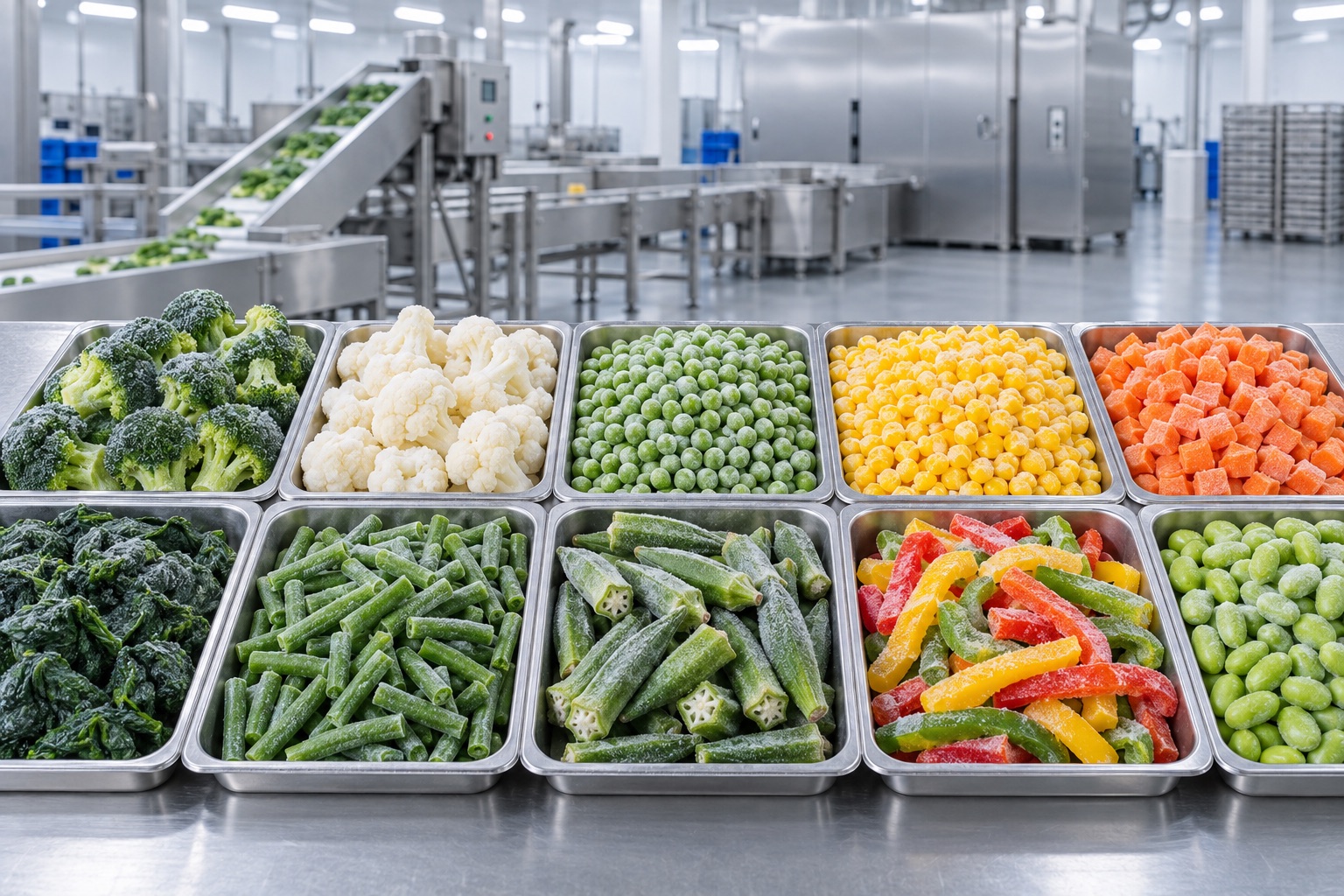
Define the broccoli style and its application
An importer comparing bulk IQF broccoli needs the same product definition on each quotation. A foodservice side dish, a prepared-meal component and an ingredient for further processing can have different requirements for the visible head, stem and proportion of smaller pieces. Identify the application and request a photograph and specification for the actual supplier SKU.
State whether the purchase is for florets, cuts or another agreed style. The USDA frozen broccoli standard treats different styles separately and applies style-specific quality criteria. Use that distinction when writing the brief; a broad description such as frozen broccoli does not define the composition of a carton. Any reference to a named grade needs its applicable standard and acceptance basis.
Agree what the size description measures
Write the dimension, measurement method and acceptable range together. A buyer may want head width, overall piece length, stem length or several dimensions recorded separately. Agree the measuring tool, the product condition during measurement and how irregular pieces are handled. Include a photograph with a scale so the buyer and producing facility can discuss the same geometry.
Commercial names can include a size code: Ardo, for example, lists a broccoli florets 20/40 product. Its public product page is a useful example of a commercial size-code name alongside separate packing and preparation information; the name alone should not be used to assume a measurement method. Ask TPJ to confirm the available caliber and its definition for the selected broccoli programme.
Separate size distribution, broken pieces and trim
A smaller complete floret and a detached fragment can affect a serving differently. Give them separate entries in the acceptance record. State whether a percentage is calculated by weight or by unit count, identify the sample quantity and record how the sample was drawn. The same numerical limit can describe different results when the denominator changes.
Use the following blank framework to agree a specification with the supplier. It proposes fields for a buyer record; it does not prescribe universal tolerances or report TPJ inspection results. Keep the sample plan and the treatment of borderline units with the signed specification.
| Specification field | Measurement or assessment basis | What to agree |
|---|---|---|
| Floret dimensions | Named dimension, tool and product condition | Target range and treatment of irregular units |
| Under- and oversize units | Weight or count; stated sample quantity | Separate limits and calculation denominator |
| Broken florets and loose fragments | Definitions supported by sample photographs | Classification and allowed proportion |
| Stem and trim | Attached stem length and detached stem recorded separately | Acceptable profile for the intended application |
| Colour and visible defects | Agreed descriptions and reference photographs | Acceptable variation and rejection criteria |
| Lot identity | Supplier SKU, production lot and specification revision | Traceable sample and release record |
Make the appearance and defect review repeatable
Describe the acceptable colour, trimming and visible condition in terms the inspection team can apply. Keep reference photographs for agreed examples and record which observation belongs in which defect category. A separate food-safety or foreign-material requirement should remain identifiable in the technical brief rather than being hidden inside a general appearance score.
The USDA reference illustrates a structured quality assessment with prerequisites and style-dependent defect limits. It is a reference for terminology, not a statement that TPJ broccoli has been assigned a USDA grade. If a buyer requires a particular grading system, specify that system and obtain written confirmation of how the actual product will be evaluated.
Keep frozen inspection and kitchen approval as separate records
Link the sample to its lot, supplier SKU and specification revision. Record the frozen inspection before preparation, then assess the prepared result using the supplier-approved instructions for that item. Document equipment, batch load and the intended serving or further-processing use. A sample accepted for one recipe should have a clear record of the conditions under which it was approved.
Freezing method and a product photograph do not establish ready-to-eat status. Obtain the current preparation and handling instructions for the selected SKU. The Ardo example explicitly provides cooking guidance for its own product; use the instructions supplied for the broccoli you are actually buying.
- Record frozen size distribution and defects against the agreed method.
- Retain the sample code, lot and current specification together.
- Document the approved preparation method and application result.
- Resolve any requested change before approving the repeat-order specification.
Send a broccoli-specific wholesale enquiry
For a targeted TPJ enquiry, provide floret or cut style, the size definition, intended application, defect requirements, bag and master-carton format, expected order volume, destination and delivery window. Include the sample acceptance sheet where available. Ask which producing facility, current specification and supporting documents apply to the proposed supply.
Confirm available calibers, pack formats, minimum order quantity and lead time for the selected programme. Keep the accepted product specification separate from the commercial quotation, and ensure both refer to the same SKU and pack. For the broader supplier qualification review, continue with the IQF vegetable audit guide linked alongside this article.
Technical references
These references explain specification terminology and buyer checks. Third-party grades, recipes and performance claims do not establish the specification of a TPJ product.
Use this checklist as a discussion guide. Product availability, technical values, certification scope and destination eligibility are confirmed for each selected item and producing facility.