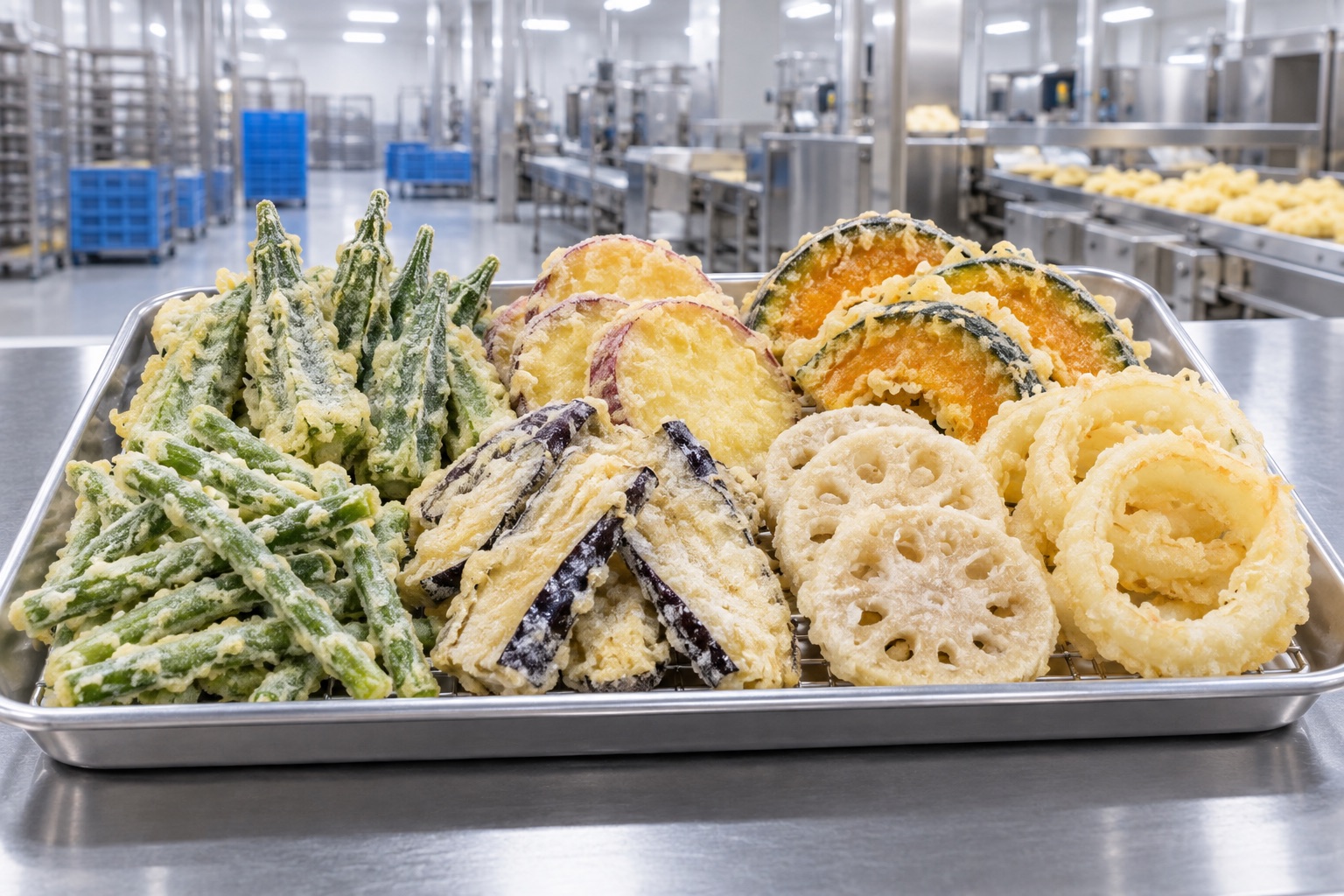
Specify sweet potato slices before comparing supplier offers
For an importer, foodservice distributor or restaurant group, frozen tempura sweet potato slices need a buying brief that describes the vegetable and its finished coating. Start with the intended menu: a separate side, an appetizer assortment or a component in a prepared meal. A buying team comparing offers needs the same product form and service requirements across every sample.
Slices, sticks and wedges are separate formats. HungHau Foods, for example, lists both sliced and stick forms on its sweet potato tempura page. This is a useful reminder to name the cut explicitly. Specify flesh colour, skin preference, raw-material preparation and whether the offered item is pre-fried. A sweet potato fry specification alone does not describe a battered slice.
TPJ reviews sweet potato tempura enquiries by proposed cut, coating, preparation method and commercial pack. Start with a reference sample or clear target specification; confirm the available recipe and format before treating a supplier offer as comparable.
Agree slice dimensions and finished-piece inspection
Give the target slice thickness and tolerance, then describe the diameter or length-and-width range. State whether dimensions refer to the vegetable before coating or the finished frozen piece. If portion control matters, record a piece-count range against a defined sample net weight. A thickness target without a measurement method leaves room for inconsistent assessments.
Agree how the buyer will inspect broken pieces, loose coating, joined pieces and visible defects. Use a written sampling method and photographs of accepted and rejected examples. Record observations separately from acceptance limits so an initial trial can help establish a realistic specification.
| Buying field | Record in the specification |
|---|---|
| Product identity | Slices, skin preference, flesh colour and pre-frying status |
| Dimensions | Thickness and tolerance; diameter or length/width; measurement stage |
| Finished-piece condition | Coating coverage, breakage, joined pieces and inspection method |
| Recipe documents | Ingredient declaration, allergen information and recipe revision |
| Preparation and portion | SKU-specific instructions, equipment and accepted serving weight |
| Commercial pack | Bag net weight, bags per case, case net weight and handling requirements |
Review the actual batter and ingredient declaration
Request the complete ingredient declaration and allergen information for the recipe offered. Record any coating or seasoning requirement in the brief, then have the producing facility review feasibility. Descriptions such as vegetable tempura or rice-flour coating do not establish that the finished item is vegan or gluten-free.
For a US-market programme, the FDA explains why buyers need to read the full ingredient information and distinguish ingredient declarations from precautionary statements. Ask the importer to review the proposed label for the destination market. Link the approved declaration to the same recipe revision used for sampling and quotation.
Approve samples using the buyer’s kitchen process
Ask for preparation instructions applicable to the selected SKU. Record the sample lot, equipment, product condition, batch loading and agreed preparation method before the trial. Cooking settings from another supplier or another vegetable are not approval instructions for this item.
Evaluate coating adhesion, colour, internal texture and broken pieces at the point of service. If the restaurant has a holding step, reproduce that actual workflow and record the result at its normal serving interval. Compare candidates under the same agreed conditions, then retain a signed sample record alongside the finished-product specification.
- Identify the sample lot, recipe revision and agreed trial procedure.
- Record starting net weight, preparation conditions and serving weight.
- Photograph the accepted finish and note coating or breakage observations.
- Have purchasing and kitchen staff agree which sample meets the menu requirement.
Compare usable portions and commercial packing
A case price alone does not show the cost of a usable menu portion. During a controlled trial, record the quantity tested, the number of portions meeting the buyer’s agreed standard and the reason for rejected pieces. Compare the tested product cost per accepted portion using the same serving definition. Keep labour, energy, freight and other costs separate unless the comparison includes them consistently.
For bulk foodservice packing, confirm inner-bag net weight, bags per carton and total case net weight together. Discuss protection against crushing, carton identification, lot traceability and the storage and transport conditions specified for the product. For a private-label request, review artwork, label information and recipe approval before agreeing the commercial pack; available options are confirmed for the proposed order.
Send a complete wholesale RFQ to TPJ
Send the product form, target dimensions, reference photographs, coating and allergen requirements, intended kitchen method, bag and case configuration, expected purchasing volume, destination country or port and required delivery period. State the requested trade terms so the quotation can be assessed on a consistent basis.
Ask TPJ to review the proposed item, representative sample, current specification and applicable producing-facility documents. Identify which requirements are essential and which can be discussed. MOQ, packing options, availability, lead time and quotation terms are confirmed for the specific programme.
Technical references
These references explain specification terminology and buyer checks. Third-party grades, recipes and performance claims do not establish the specification of a TPJ product.
Use this checklist as a discussion guide. Product availability, technical values, certification scope and destination eligibility are confirmed for each selected item and producing facility.