Separate the product decision from the artwork decision
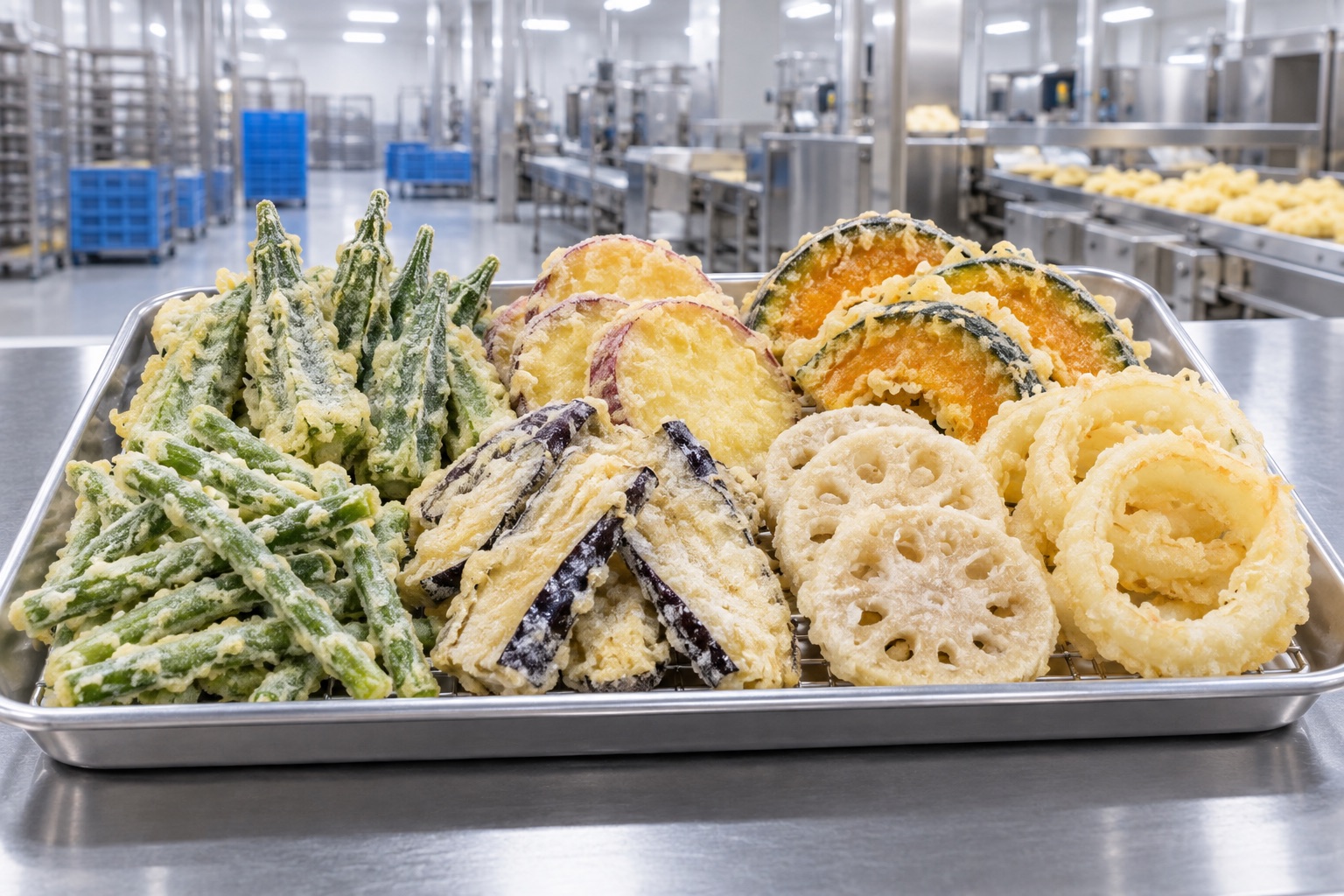
For a frozen-food importer, private-label vegetable tempura starts with a product that fits the buyer channel. A printed bag is only one part of the project. Agree whether the request is for a single vegetable, an assortment of separate pieces, or a formed mixed-vegetable item before comparing supplier proposals.
Describe the intended customer: a foodservice distributor, restaurant chain, retailer or prepared-meal manufacturer. State the destination and preparation equipment. A product designed for one kitchen method or portion format should not be assumed suitable for another without a sample review.
Write measurable product requirements
Name each vegetable and its cut, size profile and target finished piece. For an assortment, specify component proportions and how those proportions will be checked. Separate target values from agreed tolerances so the factory and buyer are evaluating the same item.
Commercial snack specifications commonly distinguish ingredients, piece size, pieces per pack and cooking methods. The Frostkrone reference below illustrates those separate fields. Use that approach to define your own brief; do not copy another manufacturer's recipe, weights or preparation settings into a TPJ product request as if they were confirmed capabilities.
| Brief area | Buyer input | Evidence to review |
|---|---|---|
| Vegetable format | Single vegetable, separate-piece assortment or mixed item | Named SKU, cut and finished-piece profile |
| Recipe | Required ingredients, exclusions and coating appearance | Current formula and allergen declaration |
| Kitchen use | Equipment, portion and intended service conditions | Approved instructions and sample evaluation record |
| Packing | Net weight, inner units, outer case and channel | Pack specification and artwork version |
| Qualification | Destination and buyer approval requirements | Named producing facility and applicable documents |
| Release | Accepted sample and agreed tolerances | Sample code, specification revision and sign-off |
Review ingredients before making label claims
A vegetable base does not establish that the finished battered product is vegan, gluten-free or free from a particular allergen. Review the actual batter, seasonings, processing aids and relevant cross-contact information for the selected production process. Where a claim is requested, ask what evidence supports that exact product and facility.
One public illustration is Kikkoman's Japanese Style Tempura Batter Mix, whose ingredient list includes wheat and nonfat dried milk. This is a different manufacturer's product, not TPJ's formulation. It shows why a category name is insufficient evidence for a buyer-brand label. Have the proposed label and claims reviewed for the destination before approving print.
Approve a sample against a recorded kitchen test
Connect the sample code to the current product specification and ingredient declaration. Use the supplier-approved preparation method and record the equipment and batch load. Assess piece consistency, coating coverage, colour, texture, breakage and portion presentation against criteria agreed before the test.
If the product will be packed for takeaway or combined in a meal, include that actual service condition in the evaluation. A successful trial under one method is not approval for every oven, fryer or air fryer. This guide sets out a buyer workflow; it does not report a TPJ trial or a validated cooking schedule.
- Record the sample lot, formula reference and specification revision.
- Keep preparation instructions and the buyer test record together.
- Document requested changes and obtain a revised sample where needed.
- Define how a reference sample and acceptance record will be retained.
Connect the approved product to the correct pack and facility
Review bag weight, units per case, case dimensions, marking, pallet requirements and handling instructions for the chosen channel. Keep the artwork version linked to the approved formulation so ingredient or allergen information is not left behind when the recipe changes.
Request the named producing facility, current specification and documents relevant to the selected product and destination. Review certificate validity and scope rather than applying an unrelated facility's credentials. Shelf life, order quantity, lead time and commercial terms require written confirmation for the actual programme.
Use a change record before the next production run
A change in vegetable cut, component mix, batter, seasoning, producing facility or pack may affect the approved item. Agree which changes require a new technical review, a revised label or another sample. Record the buyer decision against a dated specification version so subsequent orders refer to the same approved product.
Send TPJ the vegetable format, intended cooking method, ingredient and allergen requirements, target piece profile, pack, expected volume and destination. Selected private-label and recipe requests can then enter a facility-specific feasibility review. This is not a blanket OEM or ODM offer for every tempura recipe or market.
Technical references
These references explain specification terminology and buyer checks. Third-party grades, recipes and performance claims do not establish the specification of a TPJ product.
Use this checklist as a discussion guide. Product availability, technical values, certification scope and destination eligibility are confirmed for each selected item and producing facility.