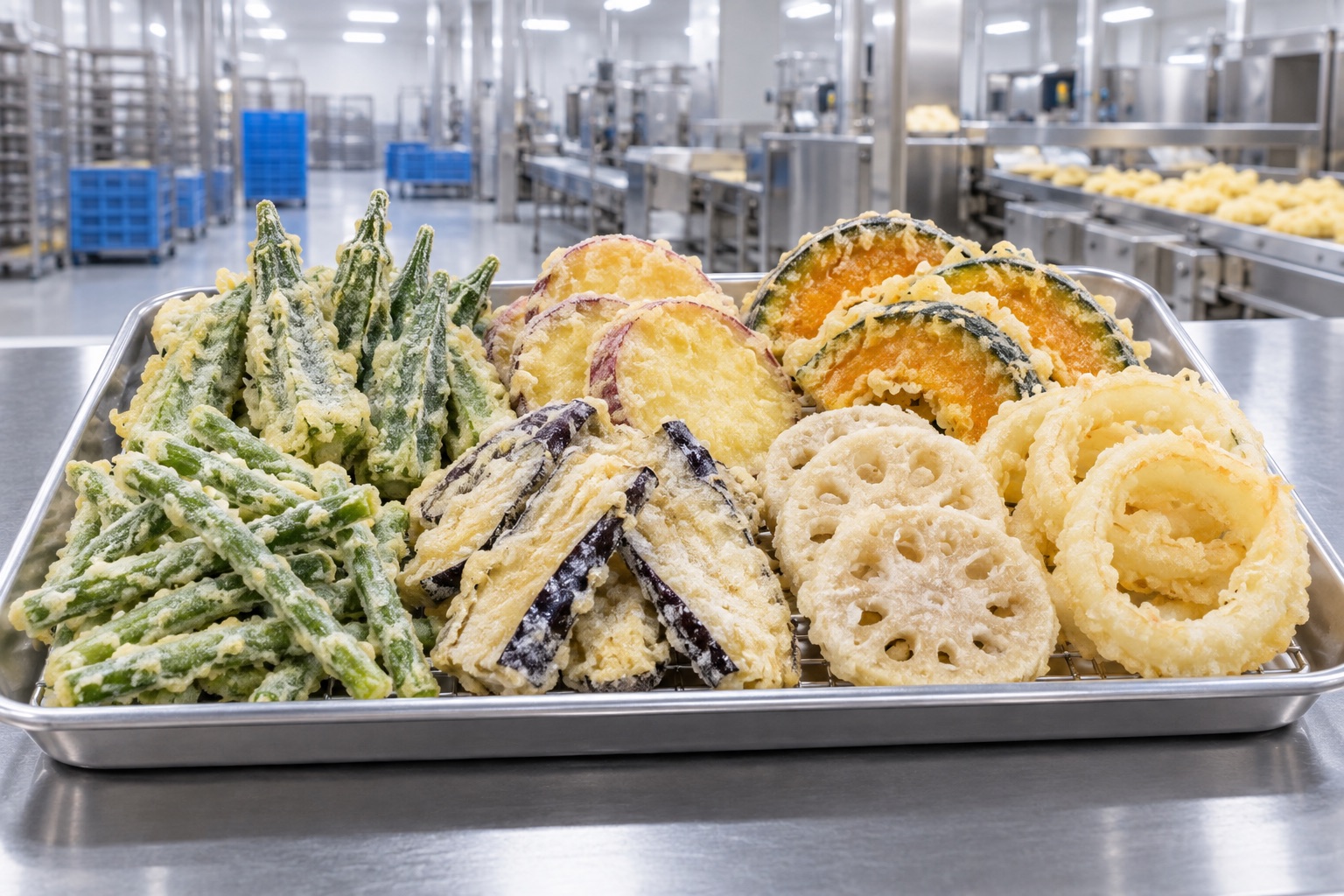
Describe the bean and the finished coated piece
Foodservice distributors and restaurant groups sourcing frozen tempura green beans need a finished-product brief. State whether the menu needs individual whole beans, shorter cut pieces or a defined assortment. A coating description alone does not tell a buyer the bean length, piece weight or proportion of broken pieces in a bag.
For TPJ enquiries, specify the preferred whole or cut bean format and ask which production programme can meet it. Confirm whether a quoted dimension measures the uncoated vegetable or the finished coated piece, and use a photograph with a scale to resolve that distinction before sample approval.
Agree a frozen-piece inspection worksheet
Inspect a representative sample using an agreed sampling method and product condition. Record intact pieces, exposed areas, loose coating and pieces frozen together separately. Use the worksheet below to record the criteria agreed with the producing facility before approving the selected SKU.
| Inspection field | Buyer requirement to record | Supplier confirmation needed |
|---|---|---|
| Bean format and length | Whole or cut; measurement point and acceptable distribution | Available format and the agreed measurement method |
| Finished coated piece | Diameter or piece-weight range if relevant to portioning | How dimensions and weight are assessed |
| Broken pieces | Definition of a broken piece and acceptance basis | Sampling method and reporting unit |
| Coating coverage | Reference photos for acceptable coverage and exposed areas | Recipe, process and sample appearance |
| Loose coating and fused pieces | Separate definitions and agreed treatment in the sample | How each observation is recorded |
| Pack configuration | Inner-bag net weight, bags per case and case marking | Confirmed SKU, case net weight and packing feasibility |
Review ingredients for the actual battered-bean SKU
Request a current ingredient declaration and allergen statement for the selected recipe and producing facility. The word vegetable does not establish the composition of the coating. McCain publishes finished battered green bean products with their own ingredient and preparation information; its US Anchor product lists milk and wheat. This illustrates why the ingredient review belongs to the selected SKU.
If a buyer needs a particular ingredient exclusion or label claim, include it in the feasibility request before sampling. Confirm the formulation, production controls and supporting evidence with the facility. Ingredient exclusions, use instructions and label claims should be supported by the selected recipe and facility documents before approval.
Test coating adhesion and bean texture in your service process
Use the preparation instructions supplied for the exact sample. Record the sample and batch identity, its condition on receipt, equipment, batch load and preparation settings. Compare the cooked colour, coating adhesion, bean texture and number of intact pieces at the same observation point for each sample.
If the product will wait before service, repeat the observations after the actual service interval and in the intended container. Record the conditions alongside the result. Do not transfer another supplier’s cooking schedule or holding claim to TPJ; the selected product must be evaluated for the buyer’s equipment and service process.
- Keep frozen-piece observations separate from cooked-product observations.
- Use the same acceptance rule for exposed beans, broken pieces and detached coating.
- Record the service interval and packaging used for the second observation.
- Retain sample photos and the specification revision used for the decision.
Compare accepted portions rather than carton price alone
For a portion-yield trial, record the frozen input, cooked output, rejected pieces and accepted portions using the same boundaries for every sample. A lower case price may not give a lower cost per accepted portion if the usable output differs. Divide the cost allocated to the tested quantity by the accepted portions from that quantity, and state which preparation costs are included.
Discuss inner-bag handling, case net weight, carton marking and the delivery schedule separately from kitchen performance. A sample approval does not confirm a particular pack size, minimum order or shipment lead time. Request these commercial details for the final product and destination.
Send a tempura green bean wholesale RFQ
Send TPJ the intended menu or distribution channel, whole or cut format, dimensional requirements, coating target, ingredient constraints, cooking equipment, packing plan, expected volume, destination and required delivery period. Attach the inspection worksheet or an agreed reference photo when available.
Ask for the current product specification, representative sample and applicable facility documents. Final recipe, tolerances, pack, availability and commercial terms are confirmed for the selected programme before order approval.
Technical references
These references explain specification terminology and buyer checks. Third-party grades, recipes and performance claims do not establish the specification of a TPJ product.
Use this checklist as a discussion guide. Product availability, technical values, certification scope and destination eligibility are confirmed for each selected item and producing facility.