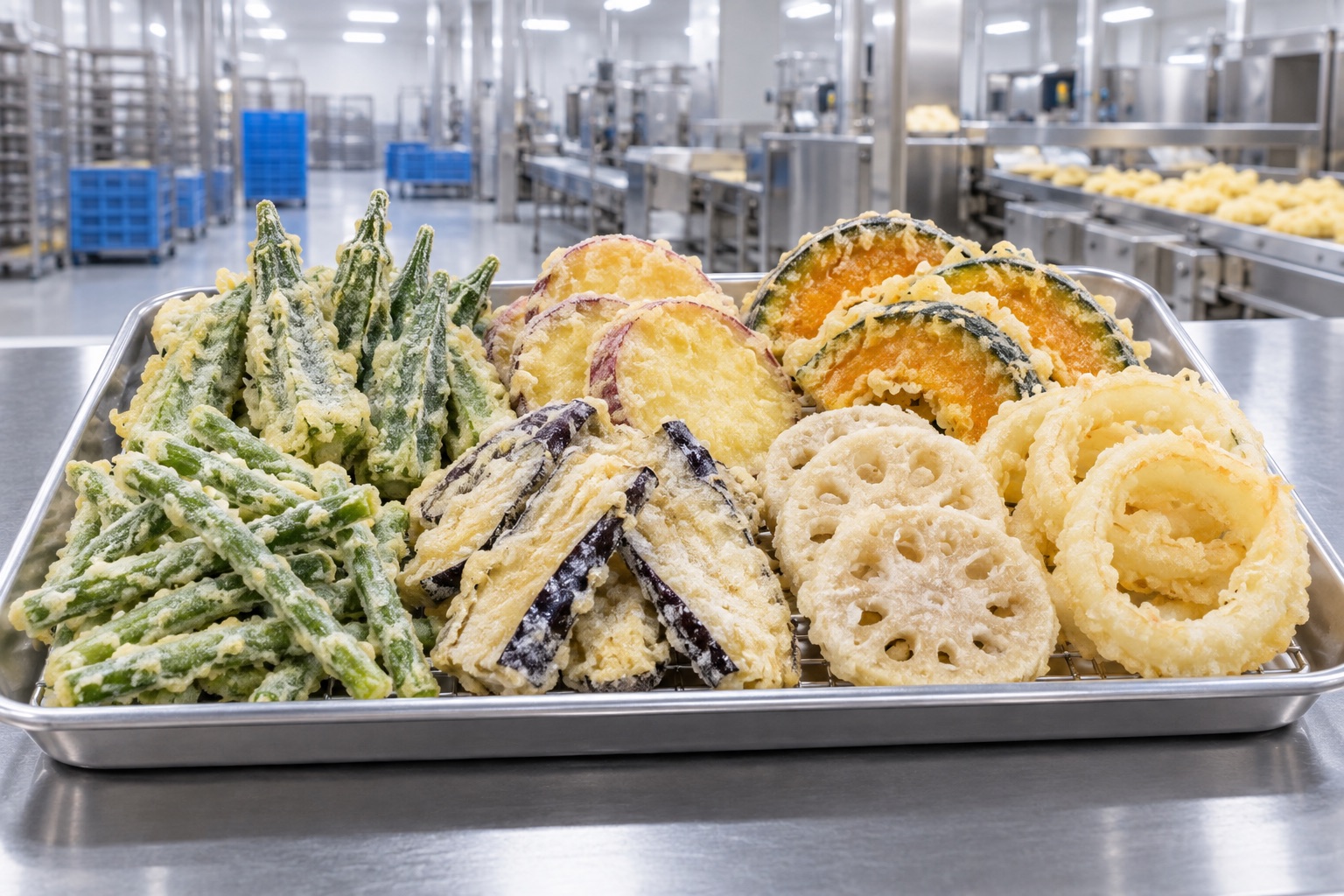
Specify coating and onion construction independently
For a foodservice distributor or restaurant chain, an onion-ring brief needs two separate decisions: the coating and the onion construction. Battered and breaded describe the coating approach. Whole-cut and formed describe how the onion portion is presented. Record both fields before comparing wholesale offers.
Official product examples show why this distinction matters. McCain lists a battered product made with whole onion rings; Lamb Weston EMEA lists a battered product that is pre-formed. Lamb Weston also publishes a breaded onion-ring specification using onion slices. These examples demonstrate combinations in the market, not a statement that every combination is available from TPJ.
Define ring dimensions and the portion you want to serve
Ask for the relevant outer and inner dimensions, slice thickness, finished piece-weight range and expected count basis. Make clear whether a measurement describes the onion slice or the finished coated ring. A coating can change the finished dimensions, so a cut-size description should not be used as the only finished-piece requirement.
For a whole-cut product, agree how natural size variation will be described and accepted. McCain notes variation in the size and shape of its naturally cut rings. For a formed item, request the actual size and piece-weight tolerances rather than assuming every supplier uses the same standard. Review how the chosen range fills the buyer-defined serving portion.
Review the actual coating and ingredient declaration
Define the intended coating appearance, coverage, surface texture and seasoning profile using the proposed SKU and sample. For a breaded request, ask how the crumb finish is described in the specification. Keep any requested formulation change linked to an updated ingredient declaration and another technical review where needed.
Review allergens and cross-contact information for the actual recipe and producing facility. The words onion rings, battered or breaded do not establish a dietary or free-from claim. The public manufacturer references list product-specific ingredients; their formulations and preparation settings should not be transferred to a TPJ enquiry as confirmed product data.
Use an onion-ring sample comparison sheet
Connect each sample to its SKU, lot and approved preparation instructions. Record the kitchen equipment, batch load, draining and serving conditions, then assess breakage, coating loss, colour, texture and the onion bite. If takeaway service is intended, include the actual pack and observation interval in the buyer trial.
This matrix is a suggested buyer worksheet. Enter observations from the actual samples and agree acceptance criteria before the trial. A universal cooking schedule or holding-time claim would not describe all coatings and constructions accurately.
| Buyer decision | Sample A | Sample B | Acceptance basis |
|---|---|---|---|
| Onion construction and coating | Enter actual specification | Enter actual specification | Whole-cut or formed; battered or breaded |
| Finished dimensions and piece weight | Enter measured range | Enter measured range | Agreed finished-product method |
| Preparation and batch load | Enter approved instructions used | Enter approved instructions used | Suitable for the intended kitchen |
| Breakage and coating condition | Enter observations | Enter observations | Buyer-defined defect criteria |
| Accepted portions | Enter measured portion count | Enter measured portion count | Agreed serving size and appearance |
| Service condition | Enter pack, interval and result | Enter pack, interval and result | Actual dine-in or takeaway use |
Compare commercial offers on the same portion basis
A carton price should be read alongside the net product weight, approved piece profile and accepted portions from a representative trial. Record rejected pieces and coating loss consistently. For an internal product-cost comparison, divide the cost of the trial quantity by the portions meeting the buyer acceptance criteria.
Use the same cost boundaries for all candidates. If labour, energy, packaging or delivery costs are included, record those inputs separately and apply the same method. This worksheet does not supply a TPJ yield, price or performance guarantee; it helps the buying team document why a particular sample fits its menu and portion plan.
Build an enquiry around the listed TPJ product
TPJ currently lists battered onion rings in its prepared-vegetable catalogue. Send the intended foodservice or retail channel, preferred onion construction, finished dimensions, coating target, preparation equipment, pack format, expected volume and destination. Request current photographs and the specification for the proposed SKU before approving a sample.
If the brief calls for breading, a formed construction, a changed recipe or buyer-brand packaging, ask for product-specific feasibility confirmation. This comparison guide does not add those options to the confirmed TPJ range. The next step is a matched product and sample proposal, followed by an agreed packing plan and commercial quotation.
Technical references
These references explain specification terminology and buyer checks. Third-party grades, recipes and performance claims do not establish the specification of a TPJ product.
Use this checklist as a discussion guide. Product availability, technical values, certification scope and destination eligibility are confirmed for each selected item and producing facility.