Define the whole onion blossom format before requesting a price
A blooming onion is a whole onion cut into connected, flower-like petals. Onion rings are separate ring-shaped pieces, so their portioning, packing and inspection criteria do not describe the same product. For a wholesale enquiry, identify the whole blossom format explicitly and explain whether it is intended as a shared restaurant appetizer, a menu special or another foodservice application.
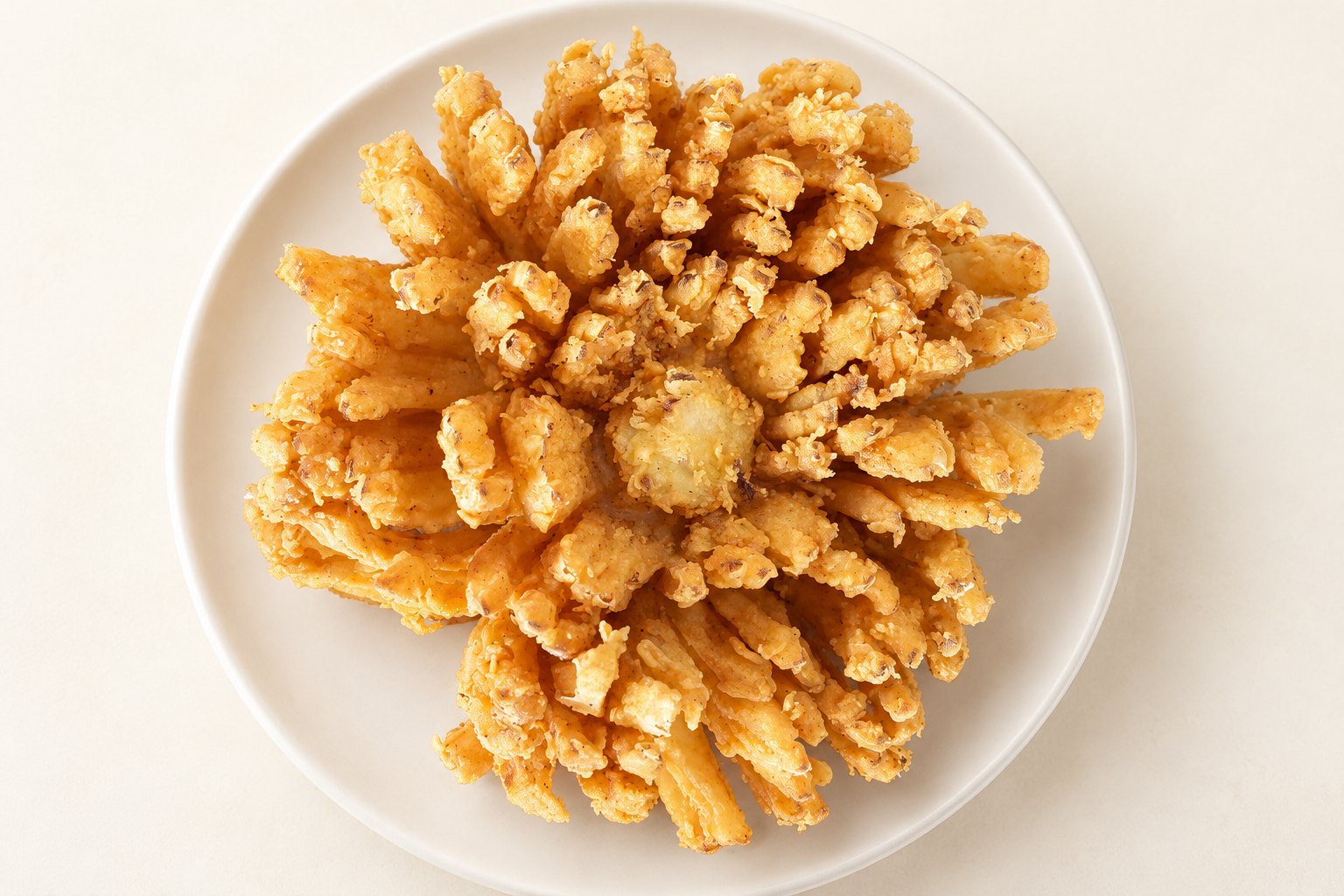
TPJ’s supplied reference photographs show a golden coated onion blossom presentation. They provide a visual starting point for sample and specification discussions. They do not establish a production recipe, freezing method, shelf life or commercial availability. TPJ reviews the proposed programme for feasibility before confirming a product specification or supply terms.
Agree unit size and what counts as an intact blossom
State the target unit weight, overall dimensions and portion presentation. Specify whether measurements refer to the onion before coating, the coated sample or the prepared blossom. Define the measurement method and acceptable variation together; a photograph without a scale cannot establish commercial dimensions.
Petal attachment matters to the finished appearance. Agree how to record detached petals, damaged outer layers, an exposed centre and units that fail to open as intended. Keep loose fragments separate from intact units when assessing a sample. Set acceptance limits with the selected producing facility rather than assuming a universal industry tolerance.
Review the coating and ingredient declaration for the proposed recipe
Request the complete ingredient declaration, allergen information and intended-use instructions for the actual proposed sample. A golden appearance does not identify the batter, breading, seasoning or ingredients present. The supplied images do not support vegetarian, vegan, gluten-free or other dietary claims.
If seasoning, colour or coating texture is central to the brief, provide a reference and identify the required result. Ask which formulation options can be evaluated. A requested recipe or buyer-brand presentation remains subject to feasibility, sample approval and supporting documentation; it is not a confirmed custom-manufacturing capability.
Run a preparation trial in the buyer’s actual service process
Use the instructions provided for the exact sample and confirm its intended storage and preparation conditions first. Record the sample identity, equipment, loading and trial settings. Assess the centre and outer petals, coating adhesion, prepared appearance and portion handling against the agreed specification. Do not transfer another product’s cooking instructions to the proposed TPJ sample.
Repeat the presentation check after the intended service interval and in the actual serving container. Note the conditions alongside observations of texture, detached coating and broken petals. Retain photographs and the specification revision so purchasing and kitchen teams can review the same result.
Test protective packing and transport handling
A whole blossom needs a packing assessment that reflects its shape. Discuss unit separation, inner protection, bag or tray format, units per case, net weight and case dimensions. Confirm which arrangement is feasible after reviewing the sample; no packing configuration is established by the reference photographs.
Compare breakage on receipt with handling after preparation. Define the inspection quantity, conditions and reporting unit, then record intact blossoms and loose petals separately. Include the proposed distribution route in this review before approving the commercial case.
Send a focused blooming onion wholesale RFQ
Send TPJ a reference image and a completed buying brief. Ask for a feasibility response, the proposed specification and representative sample before treating a quotation as an approved supply programme.
- Destination market, intended foodservice channel and required delivery period.
- Target unit size, portion appearance and petal-attachment acceptance criteria.
- Coating, seasoning, ingredient constraints and intended preparation equipment.
- Storage-format requirement and requested shelf-life evidence for review.
- Protective packing, expected volume and preferred case configuration.
- Sample approval process, applicable facility documents and commercial terms to confirm.
Use this checklist as a discussion guide. Product availability, technical values, certification scope and destination eligibility are confirmed for each selected item and producing facility.